
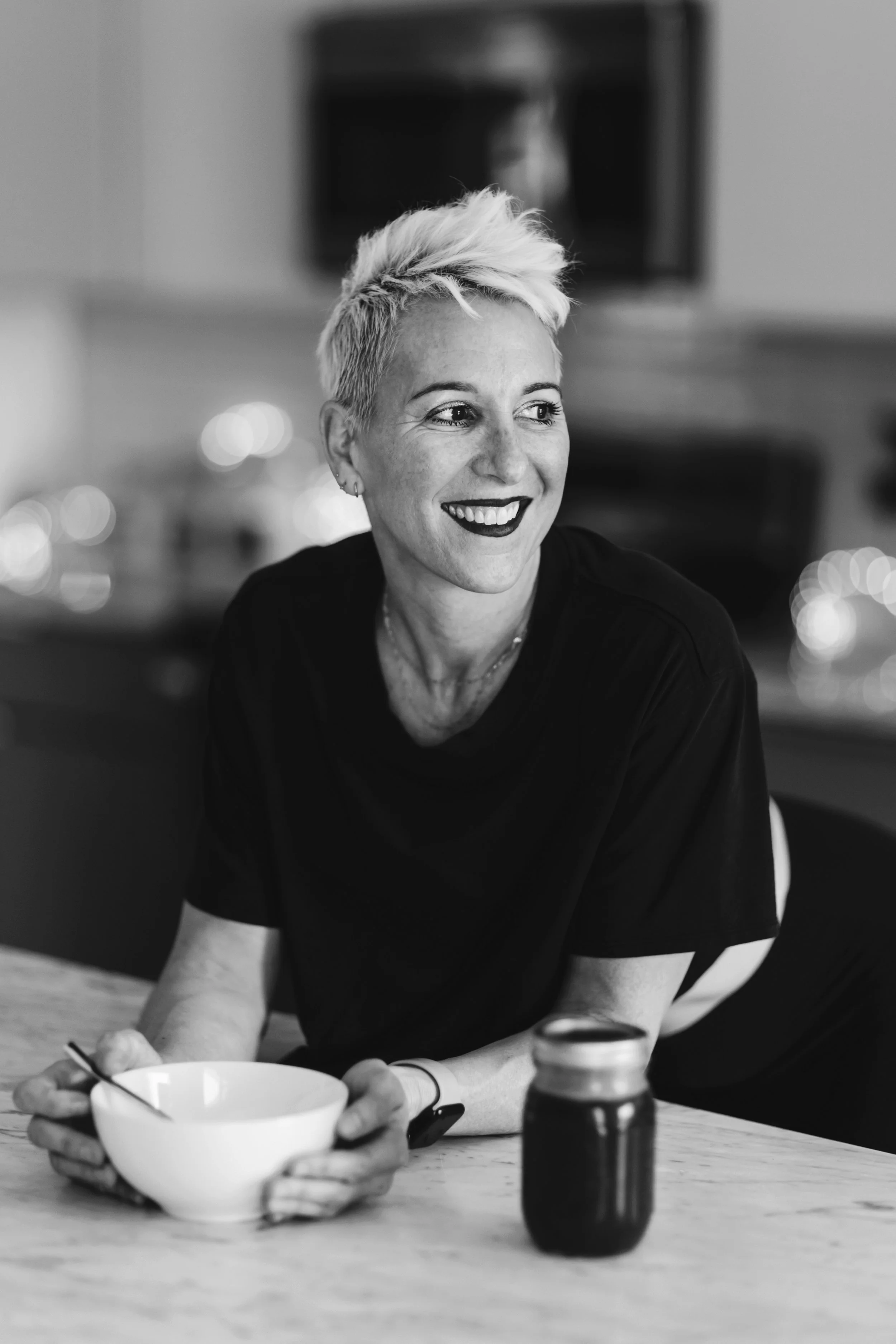
Wellness Doesn’t Equal a Salad: Rethinking What It Means to Be Healthy as We Age
Rethinking wellness for women over 40: why building muscle, eating enough protein, prioritizing sleep and recovery, and choosing strength over skinny matter more as we age.
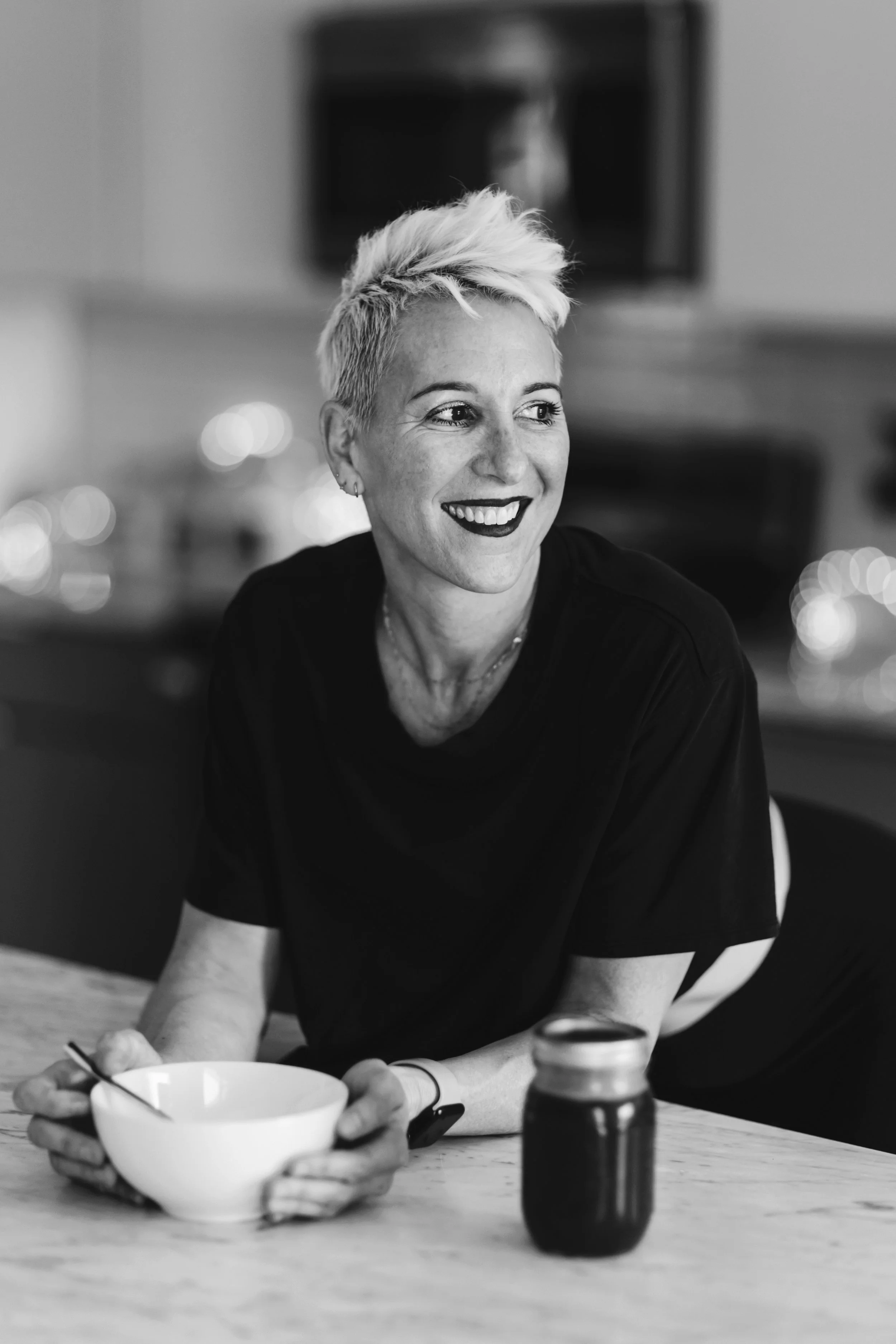
Wellness has always had a certain look…
For a long time, wellness for women has had a certain look. Salads. Green juice. Smaller portions. More cardio. A thin body.
Even as our conversations around women's health have evolved, some of those old messages are still hanging around. We may use different words now: lean, toned, healthy, clean but underneath them can still be the same goal: Take up less space.
But as we move through our 40s, 50s and beyond, I think we need a different definition of wellness. One that isn't centered on how small we can make our bodies, but on how well those bodies can carry us through the next several decades. That means talking about muscle. Food. Sleep. Recovery. Strength. And perhaps most importantly, learning to pay attention to what our bodies are actually telling us.
We're Getting Better at Paying Attention
One shift I've noticed recently among the women I train is an increased interest in understanding their bodies. More women are using wearables like the Oura Ring and paying attention to trends in sleep, recovery and readiness. The interesting part isn't the technology itself. It's what the data is teaching them. They're seeing just how much sleep matters. They're seeing the impact alcohol can have on sleep and recovery. They're recognizing connections between stress, training, rest and how they feel the next day.
And they're starting to understand that every day doesn't have to be a push day. That's progress!
A wearable shouldn't become another authority telling you whether you had a "good" or "bad" day. And a readiness score shouldn't override what your body is telling you. The value is in connecting the dots. Data should help you become more aware of your body not less connected to it.
Food Can Give Us Information, Too
I'm seeing something similar happen with nutrition. Women who spend some time tracking their food are beginning to understand what they're actually eating, not what they think they're eating.
One of the biggest discoveries? Protein and fiber.
"I thought I was eating more protein."
"I didn't realize how little fiber I was getting."
"I didn't realize I needed that much food."
Tracking doesn't have to become something you do forever. For some women, it can simply be a period of education. What foods give you protein? Where is your fiber coming from? Are your meals actually satisfying? Are you eating enough to support how much you're asking your body to do? The goal isn't to become obsessed with another set of numbers. It's to understand your habits well enough that eventually you don't need the numbers to tell you what a balanced meal looks like.
Wellness Doesn't Equal a Salad
This is where I think we still have some work to do. We've been conditioned to associate wellness with eating less. Order the salad. Skip the carbs. Choose the lowest-calorie option. Burn off what you ate. But sometimes the "healthy" choice is the bigger meal. Sometimes it's adding carbohydrates to your plate because you're training later. Sometimes it's eating breakfast instead of fasting. Sometimes it's taking a recovery day. Sometimes it's going to bed instead of squeezing in another workout. And sometimes it's choosing to build your body instead of constantly trying to shrink it.
Wellness isn't an aesthetic.
It is having a body with the resources and capacity to do the things you want it to do.
The Thin vs. Strong Conversation
This one can be uncomfortable.
I still see women who, when it comes down to it, would rather be thin than strong. They may not say those exact words. Instead, I hear things like:
"I just want to be lean."
"I don't want to get bulky."
"I'd like to lose five more pounds."
"I want more definition."
But here's something we need to understand as we age:
Muscle is an asset.
We need it for strength and physical function. Muscle also becomes increasingly important to preserve as we get older. The goal can't always be to weigh less. At some point, we have to ask a different question:
What kind of body do I want to live in when I'm 60, 70 or 80? Do you want to be able to get yourself off the floor? Carry your luggage? Pick up your grandchildren? Climb stairs without thinking about it? Continue traveling, hiking, playing, working and living independently? Then we need to give muscle a much bigger seat at the table.
If You Want to Build Muscle, Here's What It Actually Takes
Building real muscle takes time. Not a few workouts. Not a four-week challenge. And not constantly switching exercises because you're bored. It takes months and years of consistent training. Your muscles need enough resistance to create a reason to adapt. Over time, that challenge needs to progress. But training is only one side of the equation. Your body also needs the resources to build.
That means:
Consistent resistance training
Progressive overload
Adequate total food
Enough protein
Carbohydrates to help support training
Quality sleep
Recovery
Time
You can't continually ask your body to build while simultaneously trying to give it as little energy as possible. Muscle is tissue. Your body needs building materials to make it. And this is where some women unintentionally work against the result they're chasing. They want more muscle definition, but they're not eating enough. They want to get stronger, but they're afraid to increase calories. They want visible muscle, but they aren't consistently challenging that muscle. They want change, but they change their program before their body has enough time to adapt. We can't have it both ways.
Your Feet Are Part of This Conversation, Too
Wellness also means paying attention to parts of our bodies we've largely outsourced to products, including our feet. We tend to assume more cushioning and more support automatically mean better shoes. But our feet are sensory structures. They're constantly receiving information from the ground and helping our brains understand where our bodies are in space. Foot strength matters. Toe function matters. Sensory input matters. And constantly putting the foot inside highly structured footwear changes the way it interacts with the ground.
That doesn't mean everyone should throw away their cushioned shoes and start walking barefoot all day. Feet need progressive exposure and time to adapt just like any other part of the body. But it does mean we should start thinking about our feet as something to train, not simply something to support.
Roll your feet.
Move your toes.
Spend some appropriate time barefoot.
Give your toes room to spread.
Pay attention to how you walk.
Your foundation matters.
Maybe Wellness Is Simpler Than We've Made It
We have access to more health information than ever. Wearables can give us recovery data. Food tracking can teach us about nutrition. Training can show us what our bodies are capable of. But none of those things are the goal. They're tools. The goal is learning how to take care of the body you're asking to carry you through the rest of your life. Eat enough to support it. Build muscle. Sleep. Recover. Move. Pay attention. Enjoy your food. And maybe stop measuring wellness by how little space you take up.
Strong is something we get to carry with us.
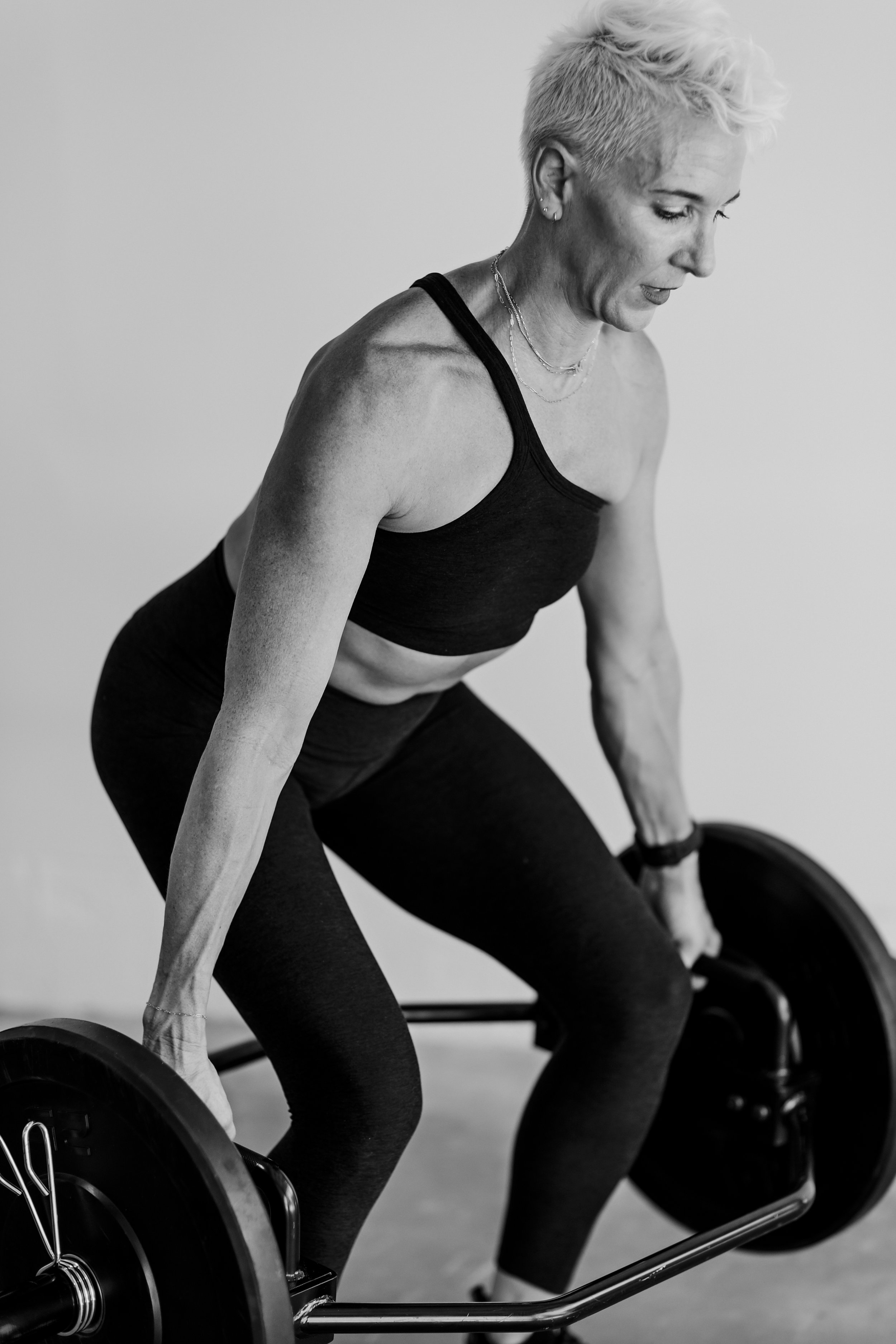
August Is the Perfect Time to Build Strength, Not Start Over
August is the perfect time to build strength not start over.
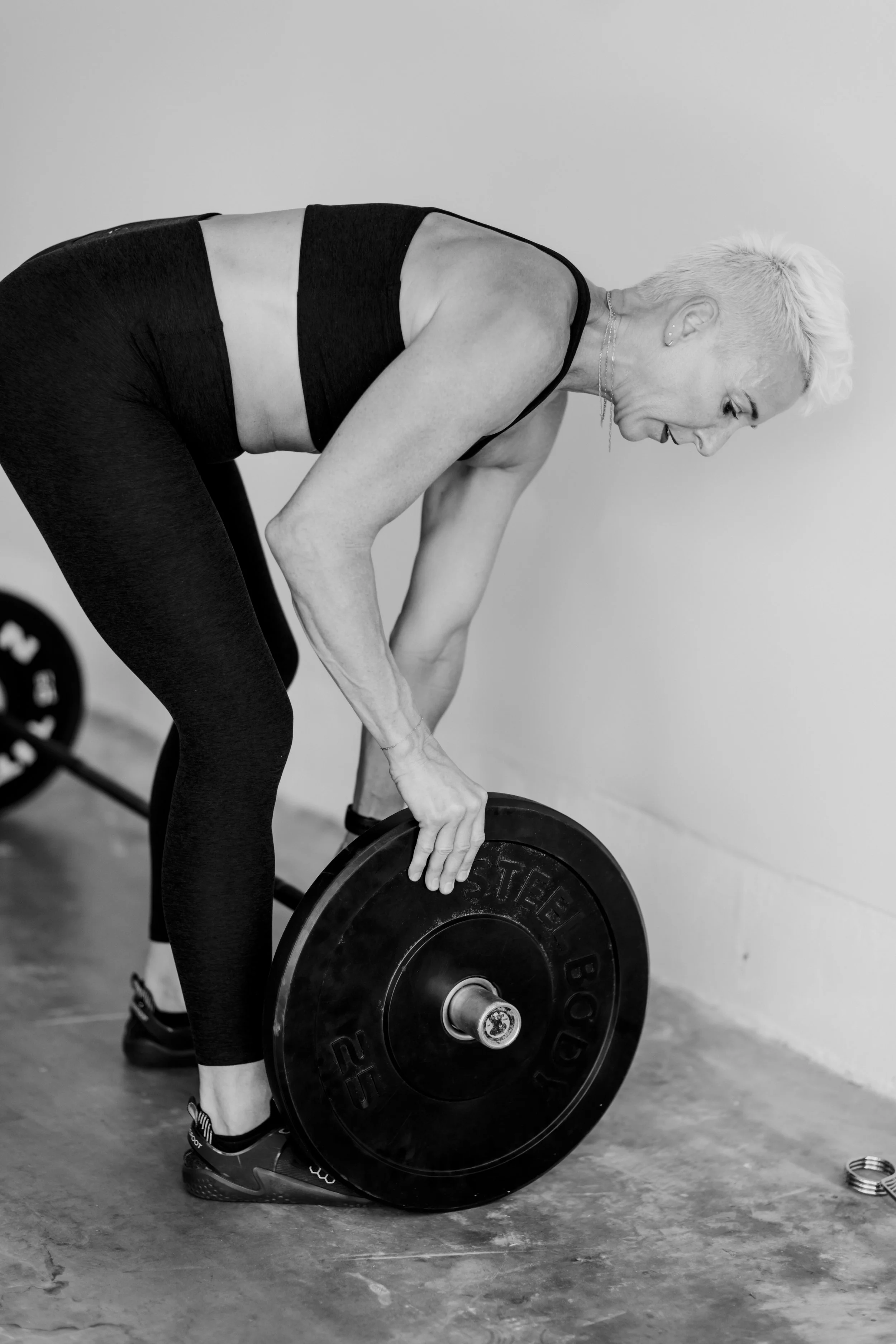
Summer has a way of pulling us out of our routines.
Vacations, kids home from school, later nights, travel, and less structure. It's all part of the season and that's okay.
But there's something about August that feels different. It's a reset. Not because we need to "get back on track," but because we have an opportunity to become more intentional about how we care for ourselves.
At the M.Method, we aren't chasing perfection. We're building something that lasts.
Word of the Month: Commit
Commitment isn't about being perfect. It's about showing up.
It's choosing the workout when motivation is low.
It's adding protein to your plate.
It's going to bed a little earlier.
It's taking the walk.
It's lifting the heavier dumbbell.
It's making the appointment you've been putting off.
The women who see the greatest transformations aren't the ones who have perfect weeks. They're the ones who keep coming back.
This month, don't commit to a number on the scale. Commit to becoming stronger. Commit to learning more about your body. Commit to your health. Commit to the habits your future self will thank you for. Because strength isn't built through perfection. It's built through commitment.
Understanding the "Why"
One of the things I love most about coaching women isn't simply helping them get stronger. It's helping them understand why they're doing what they're doing. Why strength training becomes even more important during perimenopause and menopause. Why protein and proper fueling matter. Why recovery is just as valuable as the workout itself. Why balance begins from the ground up, starting with our feet and carrying through our entire body.
When you understand your body, you stop chasing quick fixes and start making confident decisions about your health. Knowledge creates confidence. Confidence creates consistency. And consistency is what changes lives.
Every Woman's Journey Looks Different
One of my clients recently shared something that perfectly captures what so many women experience.
For years, she felt completely in control of her body. If life got busy or her routine slipped, she knew exactly how to get back on track. Then perimenopause arrived. The strategies that had always worked suddenly didn't. Instead of giving up, she chose a different path. She learned to work with her changing body instead of against it. Through strength training, proper nutrition, and a better understanding of hormonal changes, she found confidence again not because she became a different person, but because she learned a new roadmap. Stories like hers remind me why I love this work.
New Ways to Train This Fall
I'm excited to introduce two opportunities designed to meet women wherever they are on their strength journey.
Strength Lab
Our first Strength Lab is officially full!
Strength Lab is designed for experienced lifters who are ready to train with barbells, progressively overload, and focus on building strength and muscle in a small-group environment.
New four-week blocks will continue throughout the year, creating regular opportunities for women to join.
Current Sessions
Tuesday | 9:30 AM
Wednesday | 9:30 AM
Performance Training Blocks
Not everyone is ready or needs to start with a barbell.
Performance Training Blocks are designed for women who want to learn how to strength train safely and confidently using dumbbells and kettlebells. These sessions focus on movement quality, proper lifting mechanics, and building confidence before progressing to more advanced training. They're also a wonderful option for women who want expert coaching in a small-group setting and are looking for a more accessible alternative to one-on-one personal training.
Starting Mid-August
Wednesday | 7:00 AM
Saturday | 8:00 AM
No matter where you're starting, there's a place for you.
More Than a Workout
Whether you're joining HIIT, Bounce, Performance Training Blocks, Strength Lab, or personal training, my goal is always the same:
To help you build a body that supports the life you want to live. Not just for this year. For the next thirty. Thank you for being part of this incredible community. I can't wait to see what we continue to build together.
See you in class,
Melissa

Stop Stopping Every Summer: Why Consistency Matters More Than Perfection
How to stay consistent in the summer
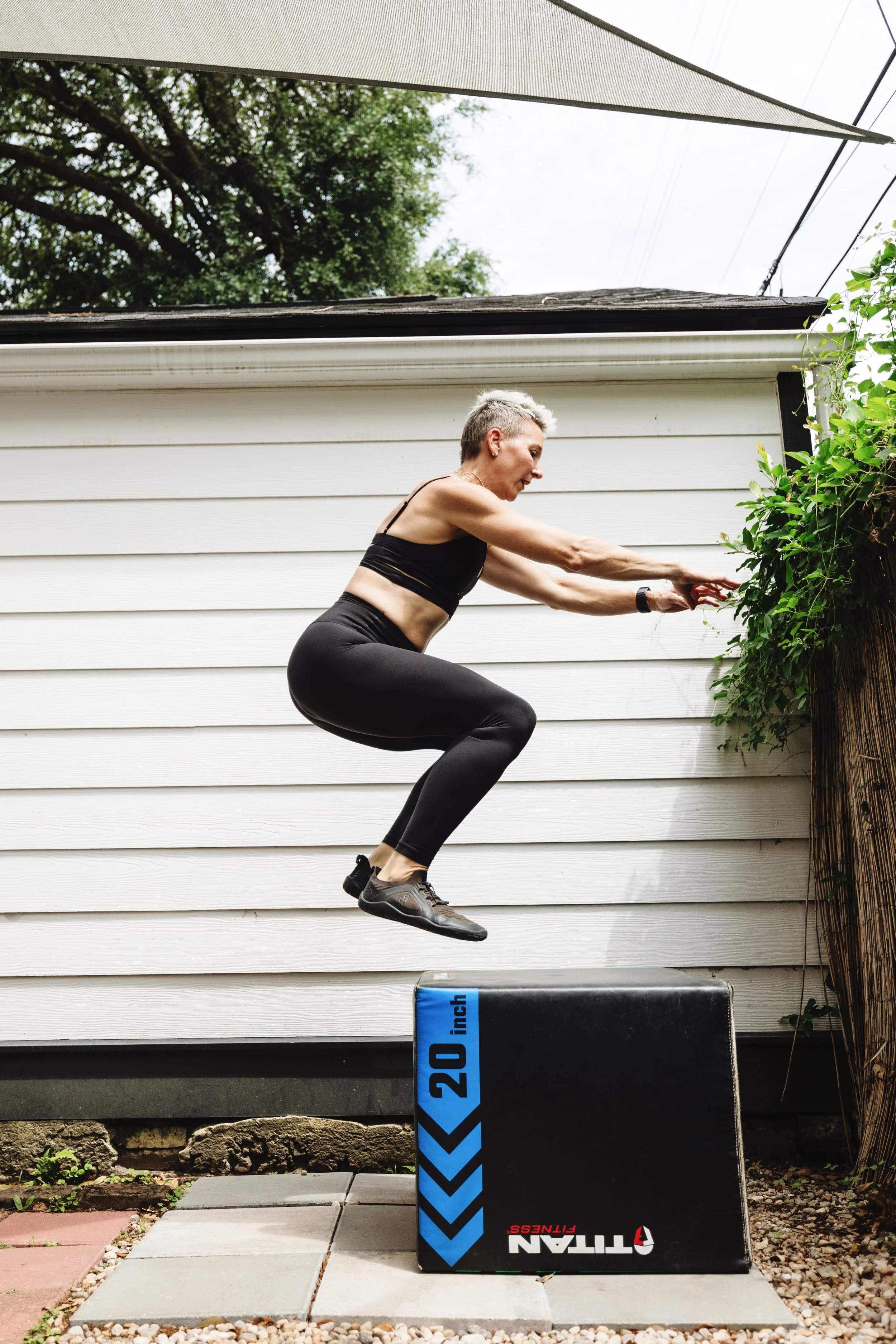
Summer arrives and suddenly routines disappear.
Vacations happen.
Kids are home. Schedules change. The heat shows up. Workouts that once felt easy suddenly feel impossible.
And somewhere along the way, many women decide:
“I’ll start again in the fall.”
But what if summer wasn’t something you had to survive? What if summer was actually the season where consistency mattered most?
Train for the Life You Want This Summer
At The M.Method, we aren’t training for a summer body. We’re training for energy. For resilience. For strength. For real life. Because fitness isn’t just what happens during workouts.
Fitness is carrying your luggage through the airport without pain.
It’s getting your bag into the overhead compartment without asking for help.
It’s climbing mountains on vacation.
It’s having enough energy for long days.
It’s recovering faster.
It’s feeling physically capable in your everyday life.
That’s what we mean when we say: Train for life.
Summer Workouts Might Look Different (And That’s Okay)
Maybe your normal workout is 60 minutes. Summer may turn that into 30. Maybe 30 turns into 15. That still counts. The body loves repeated exposure. Muscle responds to activation. Your nervous system responds to consistency.
A short session can still create:
Strength adaptations
Better posture
Increased blood flow
Improved mobility
More energy
Better recovery
This is where mini pump sessions become powerful. Repetitive movement. Frequent activation. Small deposits that create momentum. Because momentum matters more than perfection.
Traveling? Plan for Movement Before You Leave.
One of the biggest mistakes people make is waiting until vacation starts to decide whether they’ll move.
Instead:
Pack bands.
Schedule walks.
Use bodyweight.
Commit before you go. The goal isn’t perfect workouts. The goal is staying connected to movement.
Why Training Outside Might Be Good For You
Summer heat can feel brutal.
But completely avoiding outdoor movement may not always help. Our bodies are designed to adapt.
Spending more time outside may support:
Heat tolerance
Cardiovascular adaptations
Mood
Stress resilience
Circadian rhythm
Greater overall capacity
This doesn’t mean training recklessly. Hydrate. Adjust intensity. Start gradually. But allow your body opportunities to adapt.
Muscle Doesn’t Care About Long Workouts
Read that again.
Muscle does not care if you trained for 90 minutes. Muscle responds to repeated stimulus. This is why consistency beats intensity. This is why small sessions matter. This is why summer does not need to become a setback.
Why HIIT Matters In Midlife
When programmed correctly, HIIT can help support:
Power output
Muscle preservation
Cardiovascular health
Insulin sensitivity
Recovery capacity
Stamina
The goal is not to destroy yourself. The goal is strategic intensity. Train hard. Recover well. Repeat.
Foot Strength Matters More Than Most People Realize
One of the biggest things we focus on inside The M.Method is foot strength. Your feet are your foundation.
Most modern footwear limits:
Toe movement
Foot strength
Balance
Ground connection
This is why we spend time building stronger feet.
Simple places to begin:
Spend more time barefoot at home
Practice balance work
Work on toe movement
Transition slowly into barefoot footwear
Consider toe socks to allow natural toe spread
Remember: Stronger feet create stronger movement.
The Word Of The Month: Momentum
Momentum isn’t created through perfect weeks. Momentum comes from repeated actions. Small actions. Repeated often.
Summer does not have to stop your progress. Protect your momentum. Because strong doesn’t take the summer off.

How to Stay Consistent With Training This Summer
How to stay consistent in the summer
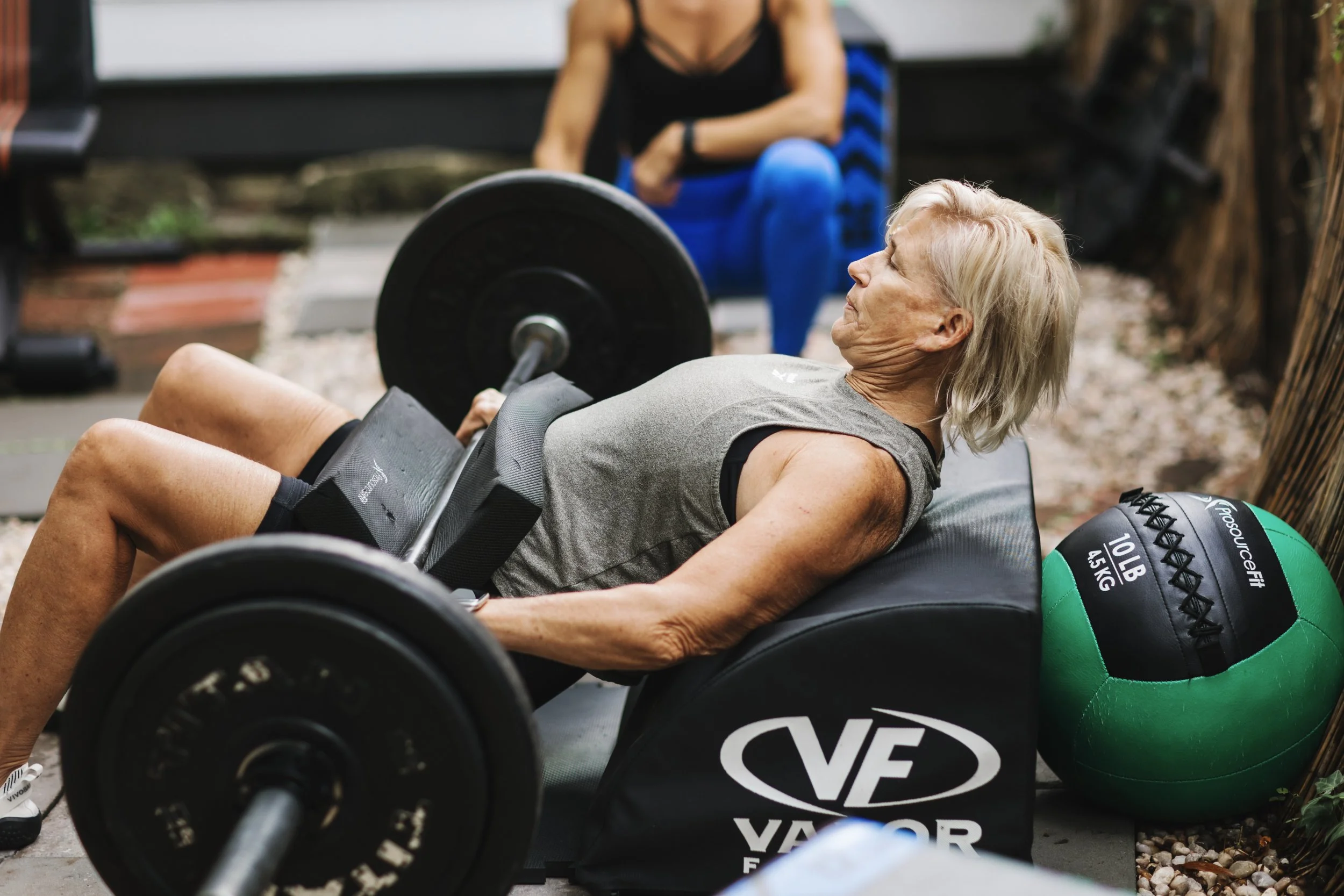
Travel, schedule shifts, and real life without losing your progress.
The Summer Mistake
Most people approach summer one of two ways:
All in: trying to keep the same rigid routine
Completely off: “I’ll start again in the fall”
Neither works.
Because your body doesn’t need extremes.
It needs continuity.
We Don’t Start Over Here
At MBBE, we don’t abandon strength when life shifts.
We adjust.
Strength stays the foundation
Conditioning supports, not replaces your training
Your plan flexes with your schedule
This is how you maintain progress without burnout.
Travel + Busy Schedules
Consistency doesn’t disappear in summer, it just looks different.
When you’re home:
2–3 quality strength sessions
Focused, not excessive
When you’re traveling:
Short workouts vs skipping
Bodyweight + bands
Walk daily
Stay in rhythm even when the structure changes.
Your body doesn’t respond to what you missed.
It responds to what you did.
Most women focus on what they didn’t do.
We shift that because consistency is built through what you continue to show up for.
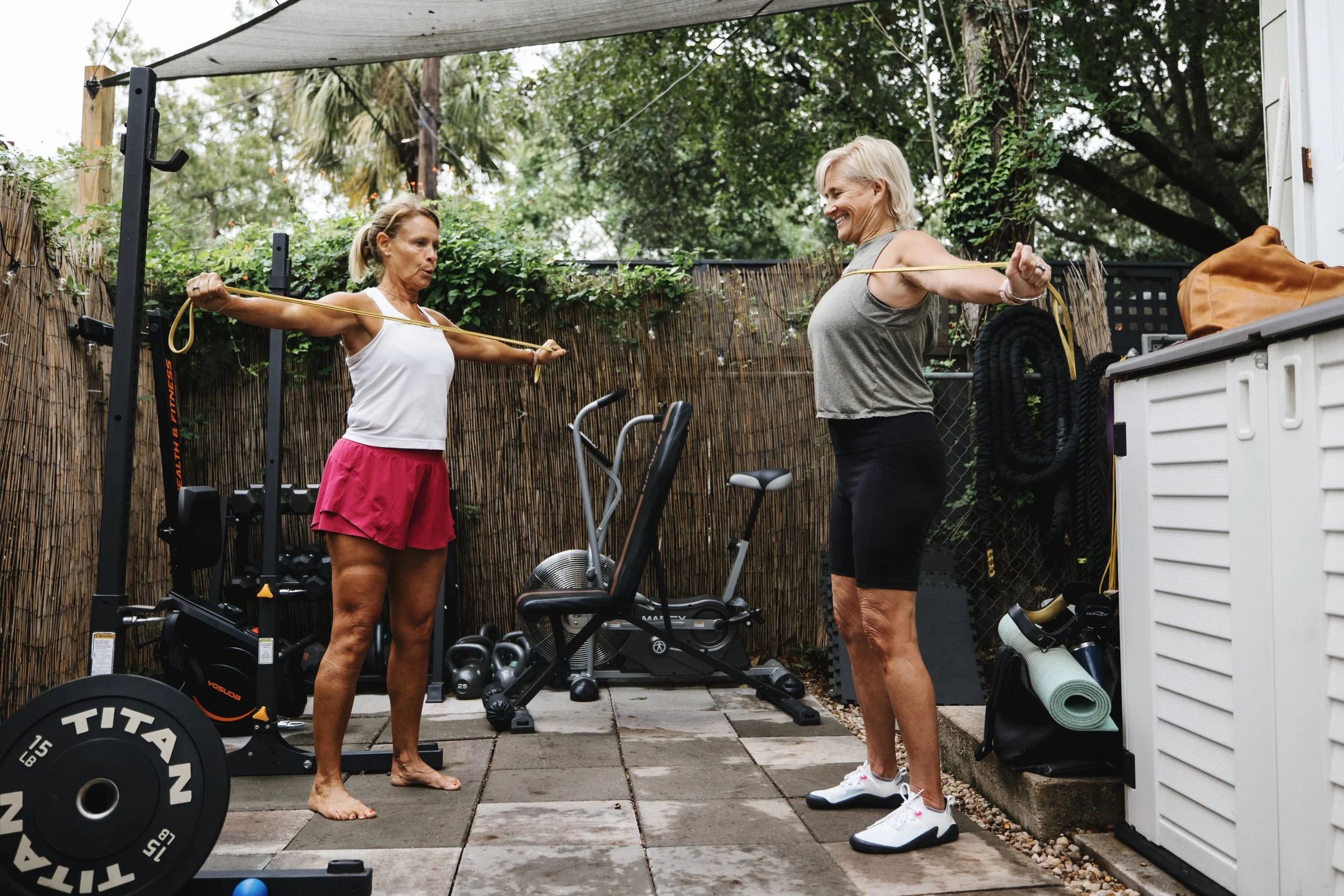
Summer isn’t a disruption.
It’s an opportunity to learn how to train in a way that actually fits your life.
This is the work.
Stay consistent this summer
If your schedule is shifting, this is the time to stay connected, not step away.
Group training is designed to keep you progressing, supported, and consistent through every season.

Why “Eating Less and Exercising More” Stops Working (Especially As You Get Older)
Strength training for women.
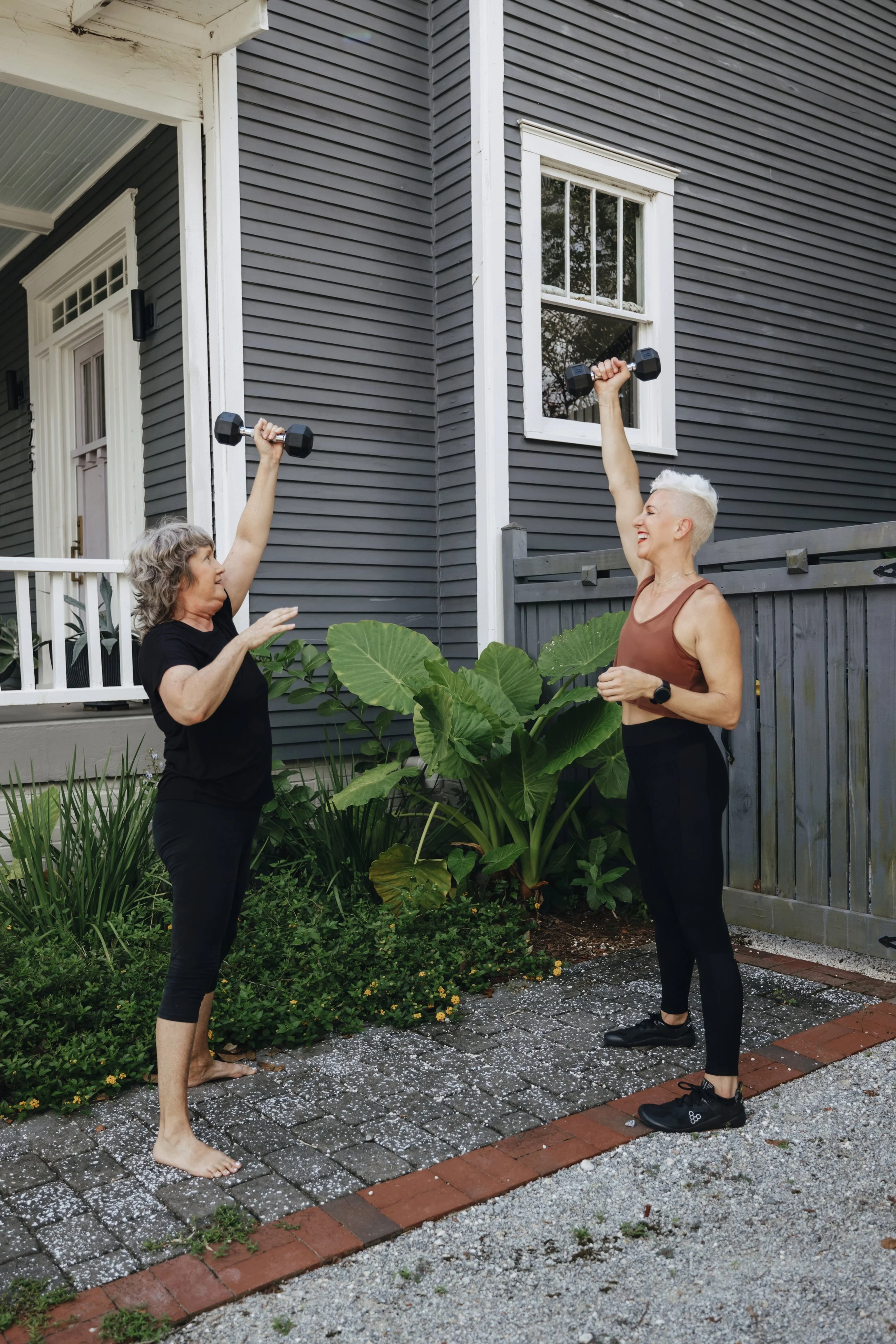
If you feel like you’re doing everything right but your body isn’t changing you’re not alone. In fact, this is one of the most common frustrations I hear:
“I’m eating less.”
“I’m working out more.”
“I’m trying so hard and nothing is happening.”
And eventually, it leads to one of two places: Burnout or giving up.
But what if the issue isn’t your effort? What if it’s the approach you’ve been taught to follow?
The Problem With “Eat Less, Move More”
For years, women have been told that weight loss comes down to one simple formula: Eat less. Move more.
And while that might work temporarily, it’s not a long-term strategy especially as your body changes with age.
Because over time, this approach can actually backfire.
When you consistently:
Eat in a calorie deficit
Do more and more cardio
Avoid properly fueling your body
Your body adapts. Your metabolism slows.Your energy drops.Your ability to build or maintain muscle decreases.And eventually progress stalls.
So you push harder.Eat even less.Do even more.And the cycle continues.
Why This Hits Harder in Your 40s, 50s, and Beyond
As you get older, your body isn’t “working against you” but it is changing.
Hormonal shifts can affect:
How your body stores fat
How you recover from workouts
Your sleep, energy, and mood
But here’s what most people miss: These changes don’t always show up clearly on lab work right away.They show up as symptoms first.
You feel more tired
Your sleep becomes inconsistent
You notice more fat around your midsection
Your workouts feel harder to recover from
And yet, you’re told:“Everything looks normal.”But normal labs don’t mean nothing is happening. They just mean you need a more supportive, strategic approach.
The Missing Piece: Muscle
If there’s one thing that changes everything it’s this:Muscle.
Muscle is what supports your metabolism. It’s what helps your body use the food you eat more efficiently. It’s what gives your body shape, strength, and resilience.
But here’s the reality: Muscle is also one of the first things you lose if you’re:
Under-eating
Overdoing cardio
Not strength training properly
And without enough muscle, your body has a much harder time changing.
A Better Approach: Build, Don’t Just Burn
Instead of asking:“How do I lose weight?” Start asking:
How do I get stronger?
How do I support my body better?
How do I build something instead of constantly trying to shrink?
Because the goal isn’t to eat less forever. The goal is to create a body that functions better.
What This Looks Like in Practice
This doesn’t mean doing more.It means doing things differently.
1. Strength train with intention
Not random workouts. Not just sweating.
Structured, progressive training that builds over time.
2. Eat enough, especially protein
Fuel your body so it can actually perform and recover.
3. Step away from chronic dieting
Your body needs periods of support not constant restriction.
4. Track better progress markers
Strength, energy, movement quality, and how you feel matter more than the scale alone.
Final Thought
Real change doesn’t come from extremes. It comes from consistency, intention, and a willingness to shift your focus, from shrinking to building. Because when you build strength, support your body, and stay consistent? Everything else starts to follow.

Why Training Harder Isn’t Working for Women Anymore
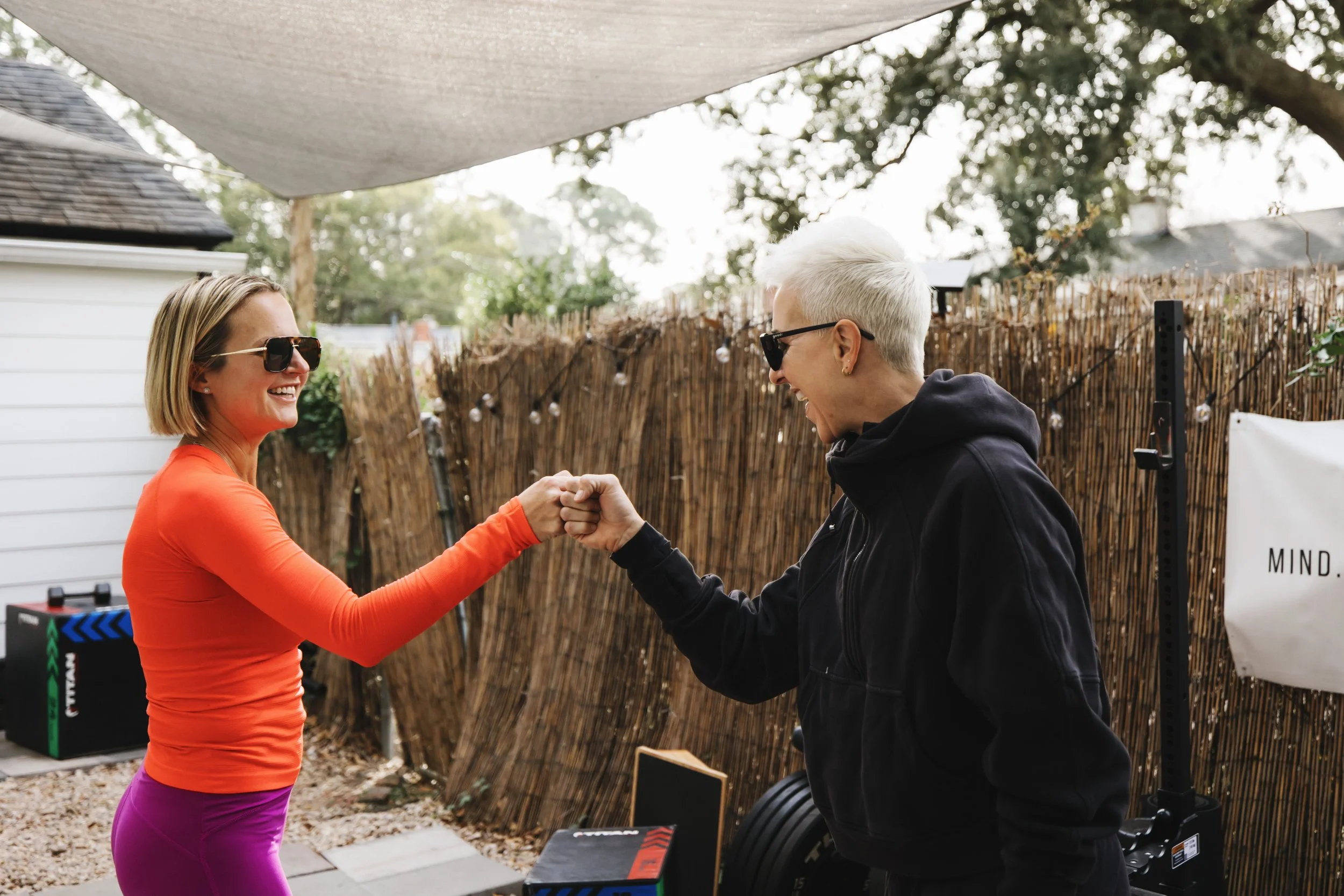
For a long time, the answer to stalled progress was simple: work harder.
More workouts.
More intensity.
More sweat.
More discipline.
And for many women, that approach used to work. But at some point—often in the late 30s, 40s, or beyond—it stops delivering the same results. Strength plateaus. Recovery takes longer. Energy dips. Motivation fades.
The instinct is to double down.
But harder isn’t the problem.
The strategy is.
Why “Harder” Worked Before
Earlier in life, the body has a greater capacity to absorb stress. Recovery is quicker. Hormonal fluctuations are easier to rebound from. You can layer intense training, underfuel slightly, sleep less—and still adapt.
As women move through different life stages, that margin shrinks.
Stress tolerance changes.
Hormones fluctuate differently.
Life load increases.
Recovery becomes the limiting factor.
The body still wants to get stronger.
It just can’t do it under constant pressure.
When Training Becomes a Stressor, Not a Stimulus
Training is meant to be a signal to the body—not a state it lives in.
When intensity is constant and recovery is ignored, the body shifts into survival mode. Instead of adapting, it protects.
This often shows up as:
Feeling sore or inflamed all the time
Needing excessive caffeine to get through workouts
Plateaued strength or body composition
Poor sleep or persistent fatigue
Nagging aches, joint pain, or injuries
This isn’t a lack of grit.
It’s accumulated stress.
Adaptation happens in recovery. Without it, even the hardest work stops working.
The Fitness Industry’s Blind Spot
Much of the fitness industry still operates on outdated training models—systems built around male physiology, calorie burn, and constant output.
What’s often missing:
Hormonal awareness
Nervous system regulation
Joint and connective tissue health
The impact of life stress outside the gym
Women are taught to override signals instead of interpret them. When results stall, they’re encouraged to push harder rather than train smarter.
The Reframe: Smarter Isn’t Softer
Training smarter doesn’t mean lowering standards or losing your edge.
It means:
Applying intensity intentionally, not constantly
Building strength and power without unnecessary fatigue
Treating recovery as a performance tool
Fueling and resting to support adaptation
This is the foundation of The M.Method.
Effort still matters. Discipline still matters. But stress is dosed strategically, so the body can actually respond.
What Training Smarter Looks Like in Practice
Training smarter may include:
Fewer, higher-quality HIIT or sprint sessions
Strength work designed to support joints and longevity
Built-in deloads and recovery phases
Adjusting intensity without abandoning consistency
Measuring success by performance, energy, and resilience—not just sweat
This approach allows women to stay athletic, capable, and strong—without burning out.
You’re Not Broken. You’re Adapting.
If training harder isn’t working the way it used to, it doesn’t mean your body is failing.
It means it’s evolving.
Strength doesn’t disappear with age.
Performance doesn’t expire.
But the approach must change.
That’s why The M.Method exists.
This is training for women who want strength that lasts.

Why I Created The M.Method
Why I Created the M.METHOD
There was a point in my career where doing everything right stopped working.
I was training consistently.
I was disciplined.
And yet my body was changing and not in the way I wanted.
Recovery took longer. Intensity hit differently. What once felt empowering started to feel punishing. And I wasn’t alone. The same conversations kept coming up with the women I instructed:
“Why does this feel harder now?”
“Why isn’t my body responding the way it used to?”
“Do I need to push more… or less?”
The fitness industry’s answer was almost always the same: do more. More cardio. More discipline. More restriction.
The Problem With Traditional Training for Women
Most training systems were never designed with women’s physiology in mind especially not women navigating perimenopause, menopause, or simply the cumulative stress of real life.
They prioritize:
Burn over build
Exhaustion over adaptation
One-size-fits-all intensity over individual readiness
And for a while, that can work. Until it doesn’t.
What I saw both personally and professionally was women blaming themselves for systems that were no longer serving them. Strong, capable women thinking they were “failing” when in reality, their bodies were asking for a smarter approach.
The Shift: Training With the Body, Not Against It
The turning point came when I stopped asking, “How do we push harder?”
and started asking, “How do we train smarter so strength lasts?”
That meant:
Respecting recovery as a performance tool, not a weakness
Understanding how hormones, nervous system stress, and life load impact training
Prioritizing strength, power, speed, and resilience not just calorie burn
It meant keeping an athletic mindset, but removing punishment from the equation.
That’s where The M.Method was born.
What Is The M.Method?
The M.Method is a training approach built specifically for women who want to feel strong, capable, and confident through every season of life.
It blends:
Science-backed movement
Athletic-style training adapted for longevity
Whole-body wellness (strength, speed, recovery, fueling, mindset)
This isn’t about slowing down.
It’s about training intelligently so you don’t have to stop.
Workouts are adaptable, intentional, and designed to support not stress your system. Strength is built from the inside out, with an emphasis on sustainability, performance, and real-world resilience.
Who The M.Method Is For
The M.Method is for women who:
Want to stay athletic, not just “active”
Are navigating perimenopause or menopause and refuse to disappear
Are tired of extremes and burnout cycles
Want training that evolves as they do
This is for women who want to lift heavy, move fast, recover well, and feel at home in their bodies again.
Why This Matters
Strength isn’t a phase.
Performance doesn’t have an expiration date.
And fitness should add to your life not drain it.
I created The M.Method because women deserve training that honors their physiology, their goals, and their longevity without losing their edge.
If this resonates with you, you’re in the right place.
This is just the beginning.